

Cat Not Eating: Causes, Tips, and When to See the Vet


Du stellst den Napf hin, deine Katze kommt, schnuppert, und geht wieder. Keine Begeisterung, kein Fressen. Und du fragst dich: Ist sie nur wählerisch, oder stimmt etwas nicht?
Katzen sind kleine Gourmets, deutlich wählerischer als die meisten Hunde. Oft steckt nichts Schlimmes dahinter, sondern Geschmack, Textur oder ein Detail beim Napf. Aber bei Katzen gibt es eine wichtige Ausnahme, die du zuerst kennen musst.
Zuerst das Wichtigste: Bei Katzen schneller zum Tierarzt
Anders als beim Hund ist anhaltende Futterverweigerung bei Katzen ein ernsteres Signal. Frisst eine Katze, vor allem eine übergewichtige, über ein bis zwei Tage gar nichts, kann das gefährlich werden. Warte hier nicht zu lange.
Geh bitte zum Tierarzt, wenn deine Katze über 24 bis 48 Stunden gar nichts frisst, wenn sie zusätzlich erbricht, sich versteckt, apathisch wirkt oder schnell abnimmt, oder wenn es sich um ein Kitten handelt. Dieser Artikel ersetzt keine tierärztliche Beratung, er hilft bei dem häufigen Fall, in dem die Katze gesund, aber einfach wählerisch ist.
Wählerisch oder appetitlos? So erkennst du den Unterschied
Eine wählerische Katze lehnt eine bestimmte Sorte ab, frisst aber sofort, wenn etwas Verlockenderes kommt, ein Leckerli oder eine andere Sorte. Ihr Appetit ist in Ordnung. Eine appetitlose Katze dagegen interessiert sich generell nicht fürs Fressen, wirkt müde und zieht sich zurück, das gehört zum Tierarzt.
Warum Katzen von Natur aus so wählerisch sind
Katzen sind reine Fleischfresser und entscheiden stark über Geruch. Riecht das Futter wenig, ist es für sie uninteressant. Dazu kommt eine angeborene Vorsicht vor Neuem: viele Katzen lehnen unbekannte Sorten erst einmal ab. Auch Textur und Form der Stückchen, Paté, Häppchen in Sauce oder Gelee, sind für Katzen Geschmackssache.
Die häufigsten Gründe, warum deine Katze nicht frisst
Wenn gesundheitlich alles in Ordnung ist, stecken meist diese Punkte dahinter:
- Zu viele Leckerlis: Snacks über den Tag verteilt machen die Hauptmahlzeit uninteressant.
- Abgestandenes Futter: Offenes Nassfutter verliert schnell Geruch und Aroma, und Katzen merken das sofort.
- Temperatur: Direkt aus dem Kühlschrank ist Futter zu kalt und riecht kaum. Zimmerwarm wird es viel lieber angenommen.
- Stress und Veränderung: Umzug, neue Möbel, ein neues Tier oder ein veränderter Tagesablauf können den Appetit dämpfen.
- Napf am falschen Ort: Zu nah am Katzenklo, neben einer lauten Waschmaschine oder an einem unruhigen Ort, viele Katzen mögen das nicht.
- Geschmack und Textur: Zu wenig Fleisch, fades Aroma oder die falsche Konsistenz, dann bleibt der Napf voll.
Der Napf-Trick: kleine Details mit großer Wirkung

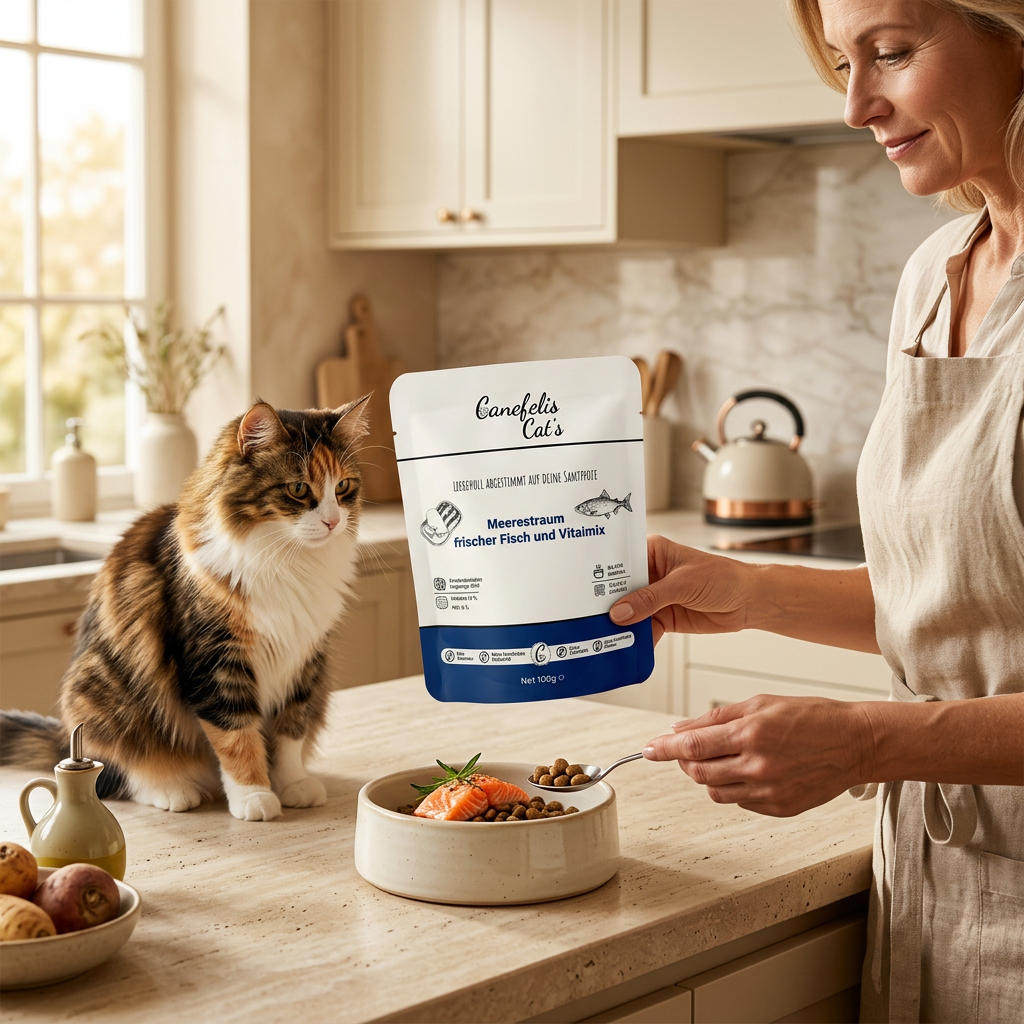
Bei Katzen entscheidet oft das Drumherum. Stell den Futternapf getrennt vom Wasser und weit weg vom Katzenklo auf. Wähle einen flachen, breiten Napf, damit die empfindlichen Schnurrhaare nicht ständig anstoßen, das mögen viele Katzen gar nicht. Und sorge für einen ruhigen Platz, an dem deine Katze ungestört fressen kann.
8 Tipps, damit deine Katze wieder frisst
- Feste Zeiten statt ganztägig: Biete das Futter 20 bis 30 Minuten an, dann nimm es weg.
- Leckerlis reduzieren, damit die Mahlzeit wieder zählt.
- Futter zimmerwarm servieren, das verstärkt den Geruch.
- Immer frisch: angebrochene Portionen kühl lagern und zügig verbrauchen.
- Textur variieren: probiere Paté, Stückchen oder eine weiche, soft-baked Variante.
- Napf-Setup optimieren: flacher Napf, ruhiger Ort, getrennt vom Wasser und Klo.
- Langsam umstellen, neue Sorte schrittweise untermischen (siehe unten).
- Hoher Fleischanteil: Katzen sprechen auf echtes Fleisch oft am besten an.
Futterumstellung bei Katzen: langsam und geduldig

Katzen reagieren empfindlich auf abrupte Wechsel. Misch das neue Futter über 7 bis 10 Tage unter das alte und erhöhe den Anteil langsam: erst ein kleiner Löffel, dann täglich etwas mehr. Bei sehr skeptischen Katzen darf es ruhig zwei Wochen dauern. Geduld schlägt hier Tempo.
Warum Geschmack, Fleischanteil und Textur entscheiden

Als reine Fleischfresser sprechen Katzen besonders auf einen hohen Anteil an echtem Fleisch an, das riecht und schmeckt für sie intensiver. Auch die Textur zählt: eine weiche, saftige Konsistenz wird oft lieber angenommen als trockene Brocken. Wichtig bleibt: Es geht um Annahme und Geschmack, nicht um ein Heilversprechen. Ob es schmeckt, zeigt am Ende nur deine Katze.
Eine zweite Chance ohne Risiko: Canefelis testen
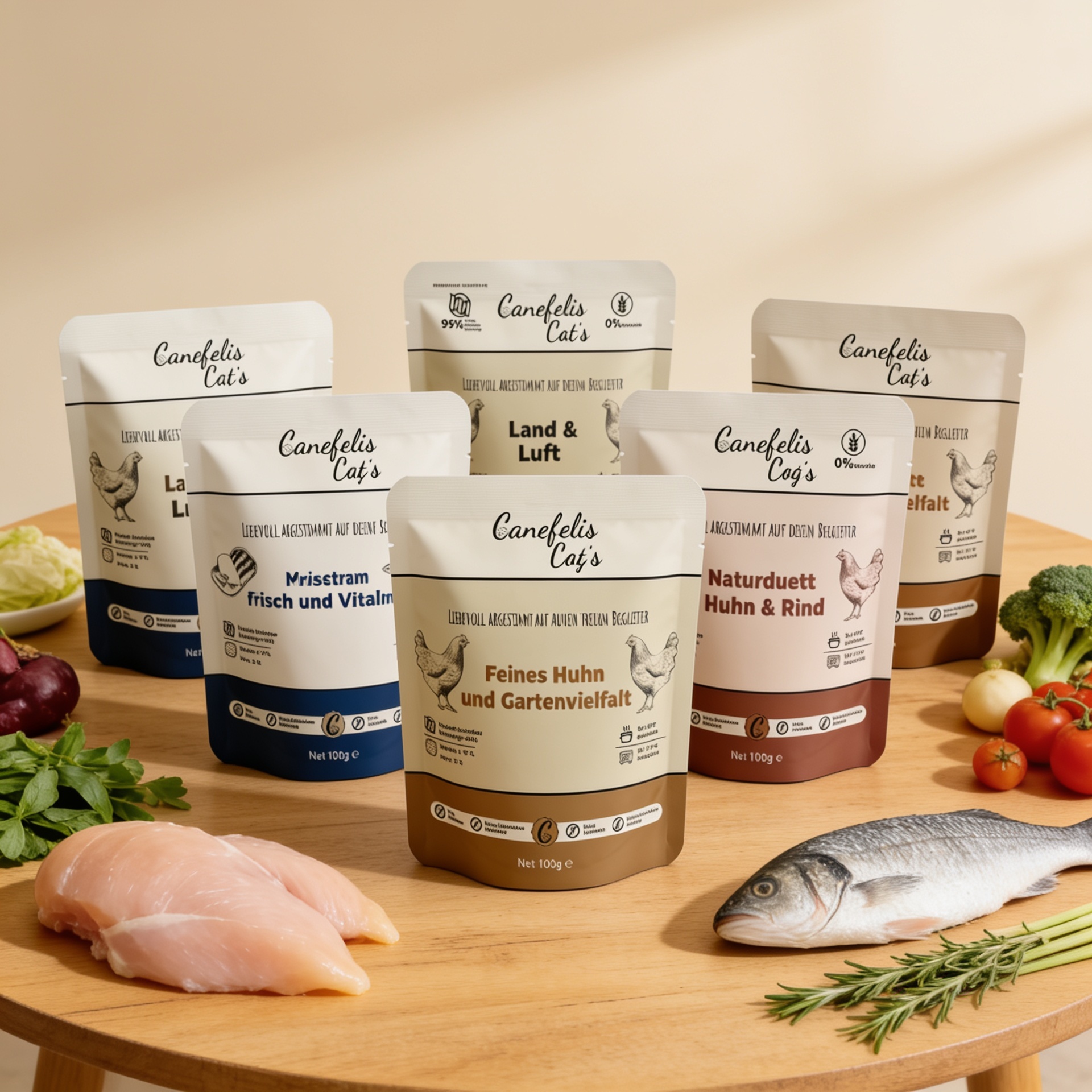
Wenn du schon mehrere Sorten erfolglos durch hast, kennst du den Frust und das schlechte Gefühl, schon wieder Geld weggeworfen zu haben. Genau dafür gibt es das Probierpaket zum kleinen Preis und die Geschmacksgarantie: Nimmt deine Katze das Probierpaket nicht an, ist dein Risiko abgesichert (Bedingungen in den AGB).
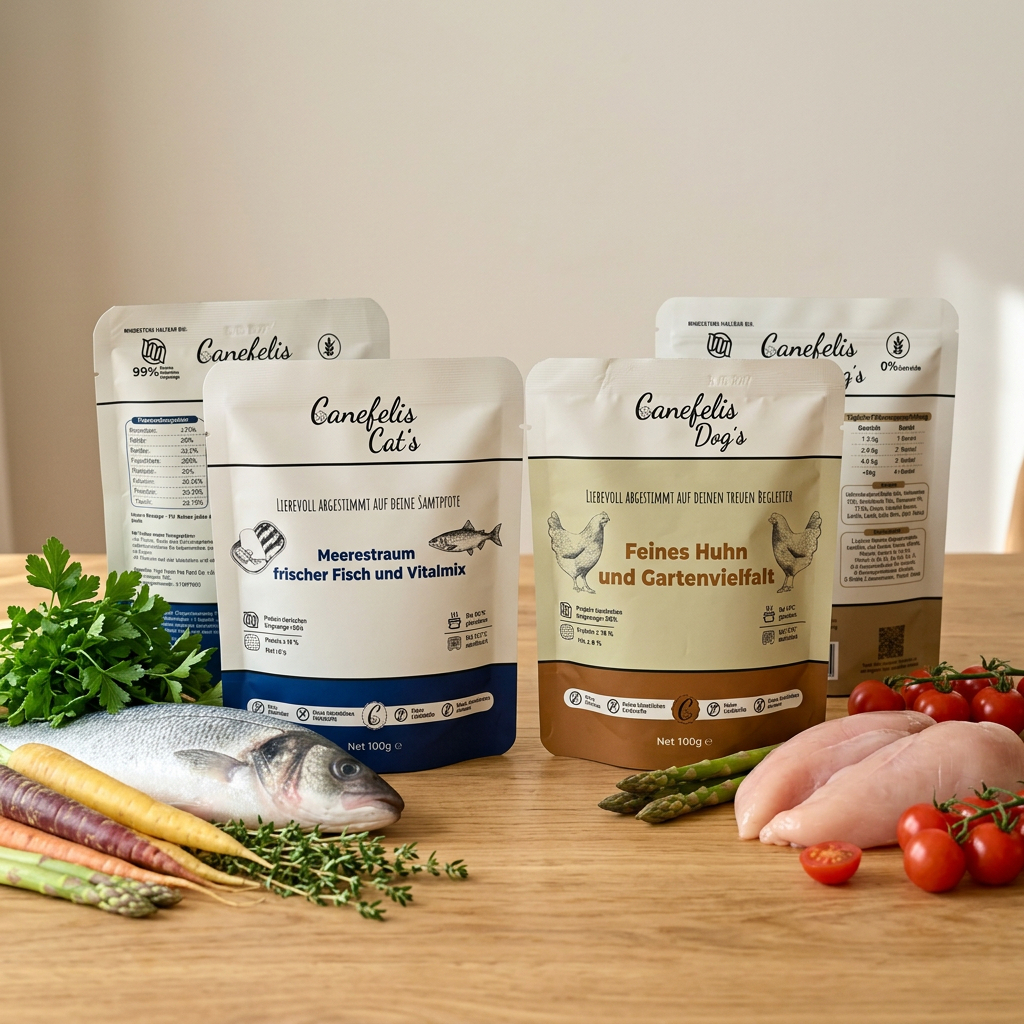
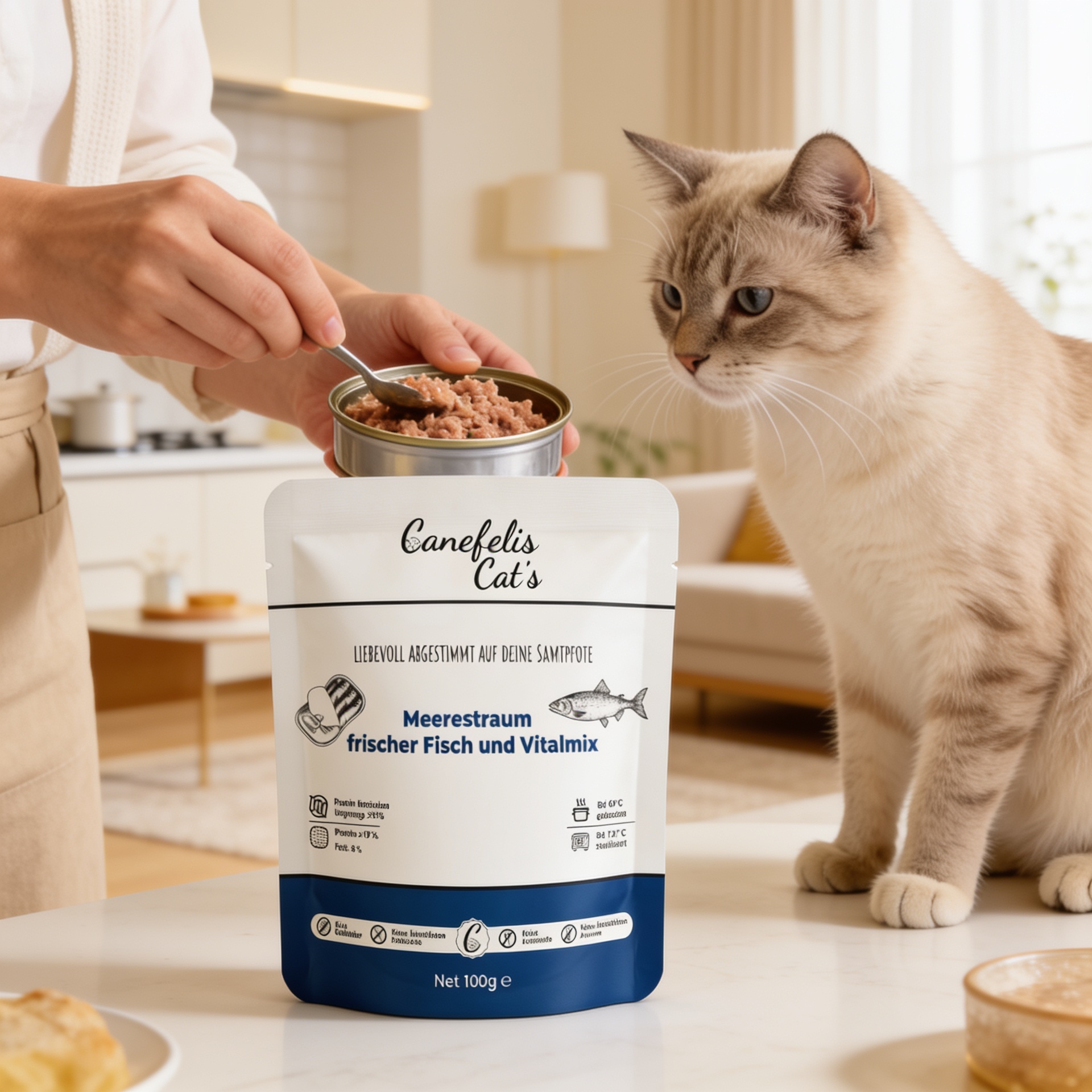
So findest du in Ruhe heraus, ob deiner Katze der hohe Fleischanteil und die weiche Textur schmecken, zum Beispiel mit einem Rezept mit 70% Hühnerbrust, ohne künstliche Aromen, Farb- und Lockstoffe. Dreh die Packung um, lies die Prozente, und lass deine Katze entscheiden.
Häufige Fragen (FAQ)
Wie lange darf eine Katze nichts fressen?
Deutlich kürzer als ein Hund. Frisst deine Katze über 24 bis 48 Stunden gar nichts, geh zum Tierarzt, bei Kitten oder übergewichtigen Katzen früher.
Meine Katze frisst nur Leckerlis, was tun?
Snacks stark reduzieren, feste Fütterungszeiten einhalten und den Napf nach 20 bis 30 Minuten wegnehmen. Wenn echter Hunger entsteht, sinkt die Wählerischkeit meist von selbst.
Meine Katze frisst kein Nassfutter, woran liegt das?
Oft an Temperatur (zu kalt), an abgestandenem Futter oder an der Textur. Zimmerwarm servieren, frisch anbieten und eine andere Konsistenz testen.
Wo soll der Futternapf stehen?
An einem ruhigen Ort, getrennt vom Wassernapf und möglichst weit weg vom Katzenklo. Ein flacher, breiter Napf schont die Schnurrhaare.

Bestseller Products