

Dog Not Eating: Causes, What You Can Do, and When It Gets Serious


You put the bowl down. Your dog comes over, sniffs briefly, and turns away. Yet another full portion ends up in the bin. And once again that quiet thought: “Am I doing something wrong?”
Take a breath. If your dog is not eating, in the vast majority of cases it does NOT mean something is seriously wrong with him — and it does not make you a bad dog mum or dad either.
But: there is a point at which food refusal really is a warning sign. So we will clear that up right at the start — and then go through every single cause, from teeth to stress to taste and texture. By the end you will know exactly where you stand and what you can do today.
Promise: no drama, no panic. Just clarity and a simple plan.
First things first: harmless or a warning sign?
A healthy, lively dog skipping one meal — because it is hot, because the routine changed, or simply because he does not feel like it — is usually no cause for concern. Dogs are not machines; their appetite fluctuates too.
🩺 When to see the vet
It does become serious when other signs appear. Please talk to your vet if:
- your adult dog eats nothing at all for well over 24 hours;
- vomiting, diarrhoea, apathy, trembling, or pain appear as well;
- your dog drinks excessively, loses weight, or behaves differently than usual;
- it is a puppy — in very young dogs, food refusal is always a case for the vet (risk of low blood sugar).
Remember the simple rule of thumb: a dog who is lively, plays and drinks but turns his nose up at a meal is usually picky. A dog who is listless and not himself belongs at the vet. This article is written for the first case.
Picky or lacking appetite? The crucial difference
This is the whole key — and most owners miss it.
A picky dog refuses a particular variety but eats immediately as soon as something “better” appears: a treat, a piece of cheese, a different brand. His appetite is perfectly fine — he has simply learned that waiting pays off. That is a behaviour and taste issue.
A dog with no appetite, on the other hand, shows little interest in food in general — even things he normally loves. He seems tired and withdraws. That is a health issue and needs to be checked.
The test is simple: does your dog light up at a treat? Then he is picky, not sick. And picky is something we can work with.
The most common reasons your dog is not eating
So you do not miss anything, we will go through all the typical causes in four groups. Most cases sit in groups 3 and 4 (routine and taste) — but read them all, because two things often come together.
1) Medical causes (please take seriously)
Teeth and mouth are the classic: a loose or broken tooth, tartar, or an inflammation make chewing painful. Typical sign: the dog eats soft things or treats but avoids hard food. Then there are digestive problems, nausea, or declining organ function in older dogs (kidneys, liver). Appetite can also dip briefly after a vaccination or when in pain.
Important: these causes are not solved by switching food, but by the vet. If you suspect pain is involved, get it checked first — then think about taste.
2) Situational causes (environment & emotions)
Dogs are creatures of habit. Moving house, a new family member (baby, second dog), changed feeding times, summer heat, stress, boredom, or heat cycles in females — all of this can dampen appetite for a while. Patience and a calm, stable routine usually help here.
3) Feeding-related causes (the most commonly overlooked)
- Too many treats: the biggest classic. A dog who snacks all day simply is not hungry at mealtime.
- Free feeding: if the bowl is always available, real hunger at a fixed time never develops.
- Stale or rancid food: open cans or old food lose smell and taste — and dogs notice instantly.
- Temperature: straight from the fridge, food tastes bland. At room temperature the aromas open up much better.
- Switching food too fast: with an abrupt change, dogs often reject the new food at first.
4) Taste and texture (this is where you have real influence)
Your dog cannot read the packaging — he decides with his nose and mouth. If the food has little smell or taste, it stays in the bowl. And texture is often the underrated factor: many dogs dislike very hard kibble. A soft, juicy consistency is frequently accepted much more readily.
Puppy, adult dog, senior — what matters at each age
Age changes the picture — and with it your response.
With puppies, the most common harmless reason is teething: if the kibble is too hard, chewing hurts. One tip is to soak the food briefly or choose a softer variety right away. But careful: if a puppy refuses food for longer, go to the vet immediately — puppies have very few reserves.
With adult dogs it is usually routine, treats, and taste — exactly the points we are about to work on.
With seniors, the likelihood of a medical cause increases. If an older dog refuses his normal food but takes treats, teeth or organs are often involved. A vet check comes first here. At the same time, a soft, aromatic texture is often easier for seniors to accept.
“My dog only eats treats, not his food” — the most common training mistake
Sound familiar? The bowl stays full, but the moment the treat jar rustles, the dog is wide awake. This is almost never a medical problem (in a lively dog) — it is learned behaviour.
The logic from the dog’s point of view is simple: “If I ignore the boring food, something better will come along sooner or later.” And honestly — we humans train this ourselves. A piece here, a bite from the table there, a treat out of guilt. Dogs learn fast.
The good news: what was trained in can be trained out again. Here is how.
Switching food step by step (the 7–10 day plan)
One of the most common reasons a dog refuses new food is banal: the switch happened too fast. Stomach and taste need a few days. So take it slowly, following this simple plan.
Two tips that make the difference: mix the new food well into the old at the start (do not just place it beside it), so the familiar smell “carries” the new one. And watch the stool — if it stays normal, you can go a little faster; if it gets soft, stay on the same step for an extra day or two. With very sensitive dogs, the switch can comfortably take 14 days.
5 mistakes that unknowingly make pickiness worse
Sometimes it is not about what we do — but what we get wrong out of love. These are the five mistakes we see most often, and all of them are easy to fix.
- Constantly switching varieties: buying a new type at every “no” confirms to the dog that refusing works.
- Toppings as a permanent fix: a bit of cheese or sausage “to tempt him” — and soon he only eats the topping.
- Adding more out of worry: when he does not eat, many owners anxiously offer even more choice. That reinforces the game.
- Fuss around the bowl: watching, commenting, pushing — it makes insecure dogs nervous.
- Portions too large: an overfilled bowl can put some dogs off rather than tempt them.
The solution comes down to one word: consistency. Choose a good food, give it a fair chance over a few days, and do not let yourself be rushed into a U-turn. Dogs love clarity — at the bowl too.
9 tips to get your dog eating again
You do not have to implement everything at once. Pick three points, stay consistent for a week, and observe. That is usually enough.
- Fixed feeding times: offer the food for 15–20 minutes, then take it away without comment. Real hunger builds for the next meal.
- Radically reduce treats: almost no snacks for a few days. The main meal has to be “worth something” again.
- Nothing from the table: hard as it is — every bite from the plate sabotages the plan.
- Warm the food slightly: room temperature or briefly hand-warm — the aromas open up, the bowl smells “alive”.
- Keep it fresh: store opened food in the fridge and use it up quickly; never serve anything stale.
- Adjust the texture: try a soft, juicy variety — many picky dogs accept it far more readily than hard kibble.
- Switch slowly (7–10 days): mix the new food into the old step by step, increasing the share daily.
- Calm & a fixed spot: a quiet place without distraction or spectators — it helps insecure dogs.
- Exercise before eating: a walk builds hunger — appetite often comes with activity.
An honest word: stay consistent, but loving. A healthy dog will not voluntarily starve next to a full bowl — he is only testing whether the rules really apply. Hold the line, and the bowl will empty again.
Why taste, texture, and freshness decide acceptance
Imagine someone serving you the same lukewarm, odourless meal for days. Eventually you would just poke at it listlessly too. Your dog feels the same — except he cannot complain, he can only turn his head away.
Three levers make the difference: smell (dogs “see” with their nose), taste (a high share of real meat tastes more intense to most dogs), and texture (soft and juicy is often eaten more readily than hard and dry). The important part remains: this is about acceptance and enjoyment, not a promise of any health effect. Whether it tastes good is something only your dog decides.
What you can look for in the food itself
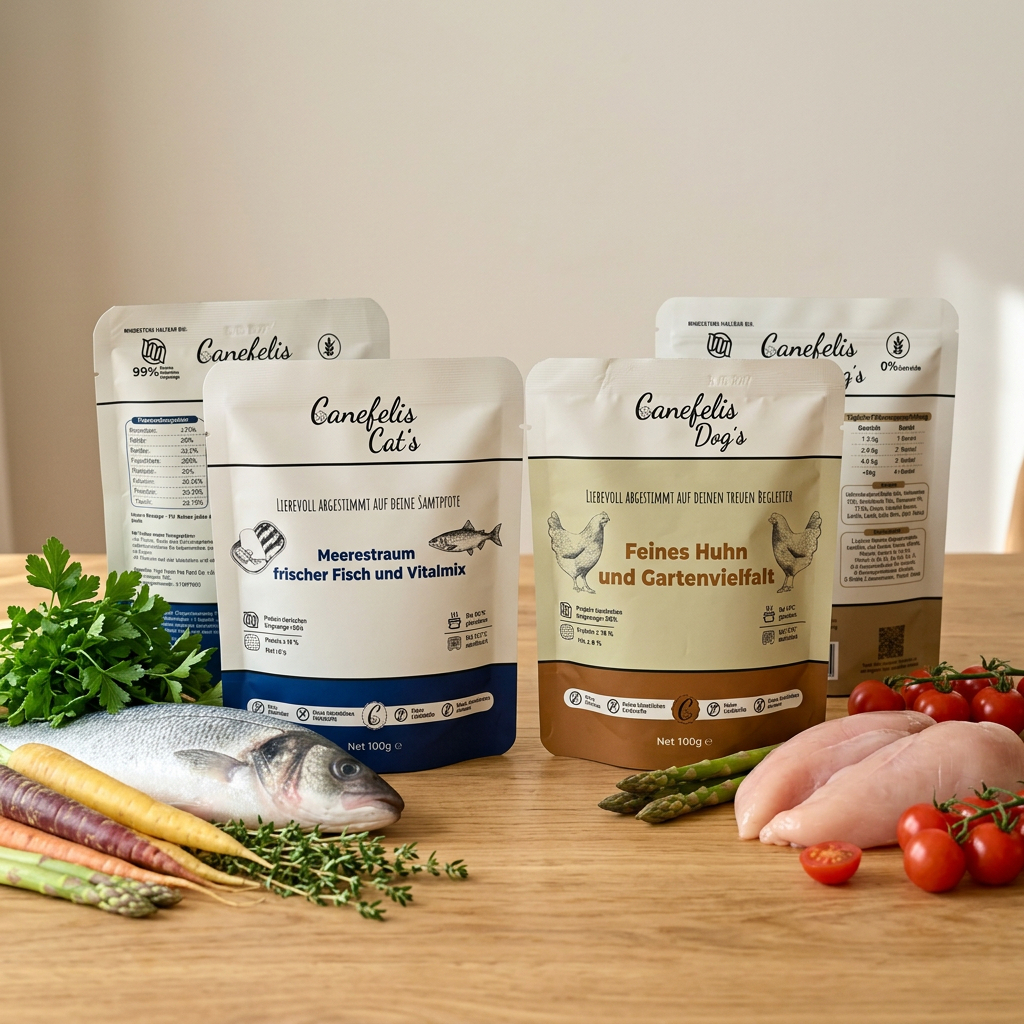
If you are testing a new variety anyway, it pays to look at the label — not the pretty packaging. A good sign: an open, clear declaration. Instead of vague terms like “meat and animal by-products”, you can see exactly which ingredients are included and in what percentage.
Our tip — the 30-second check: turn the pack around and read the composition. Is there a concrete percentage of meat? Are the ingredients named? (How to read a label completely is explained step by step in our article on animal by-products.)
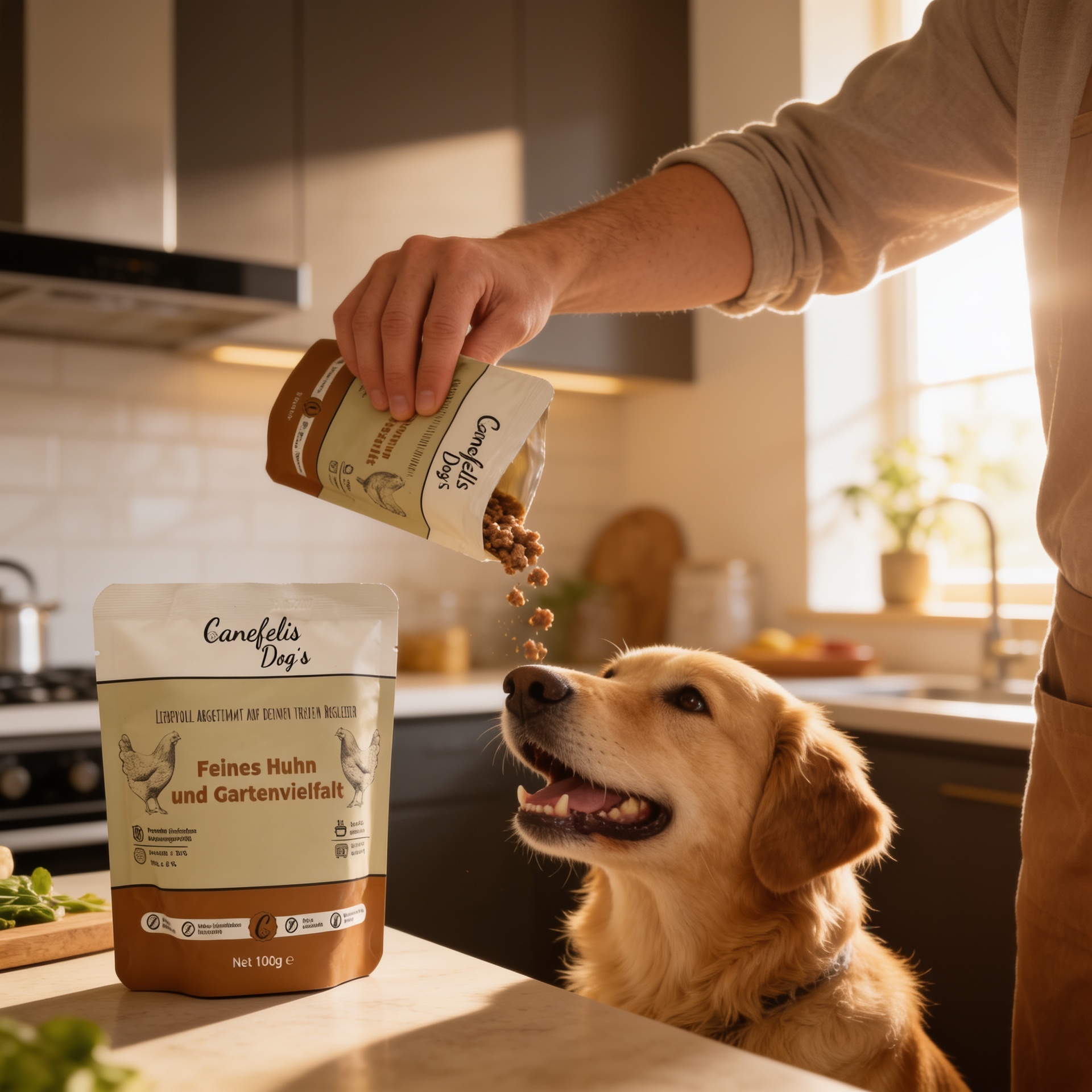
A second chance without the risk: try Canefelis with the taste guarantee
If you have already worked through several varieties, you know that uneasy feeling: “What if he refuses this one too and I throw money in the bin again?” We take that feeling away.
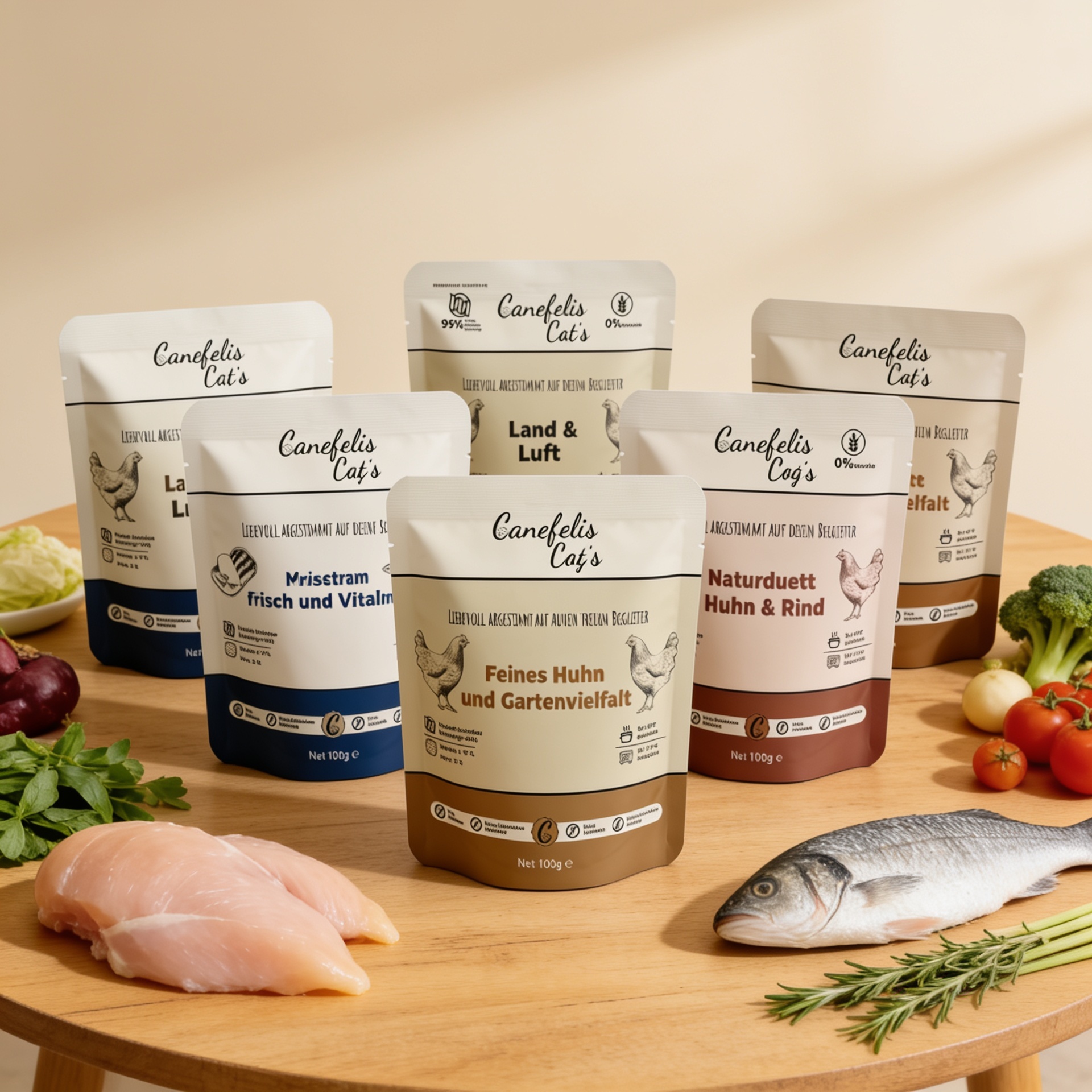
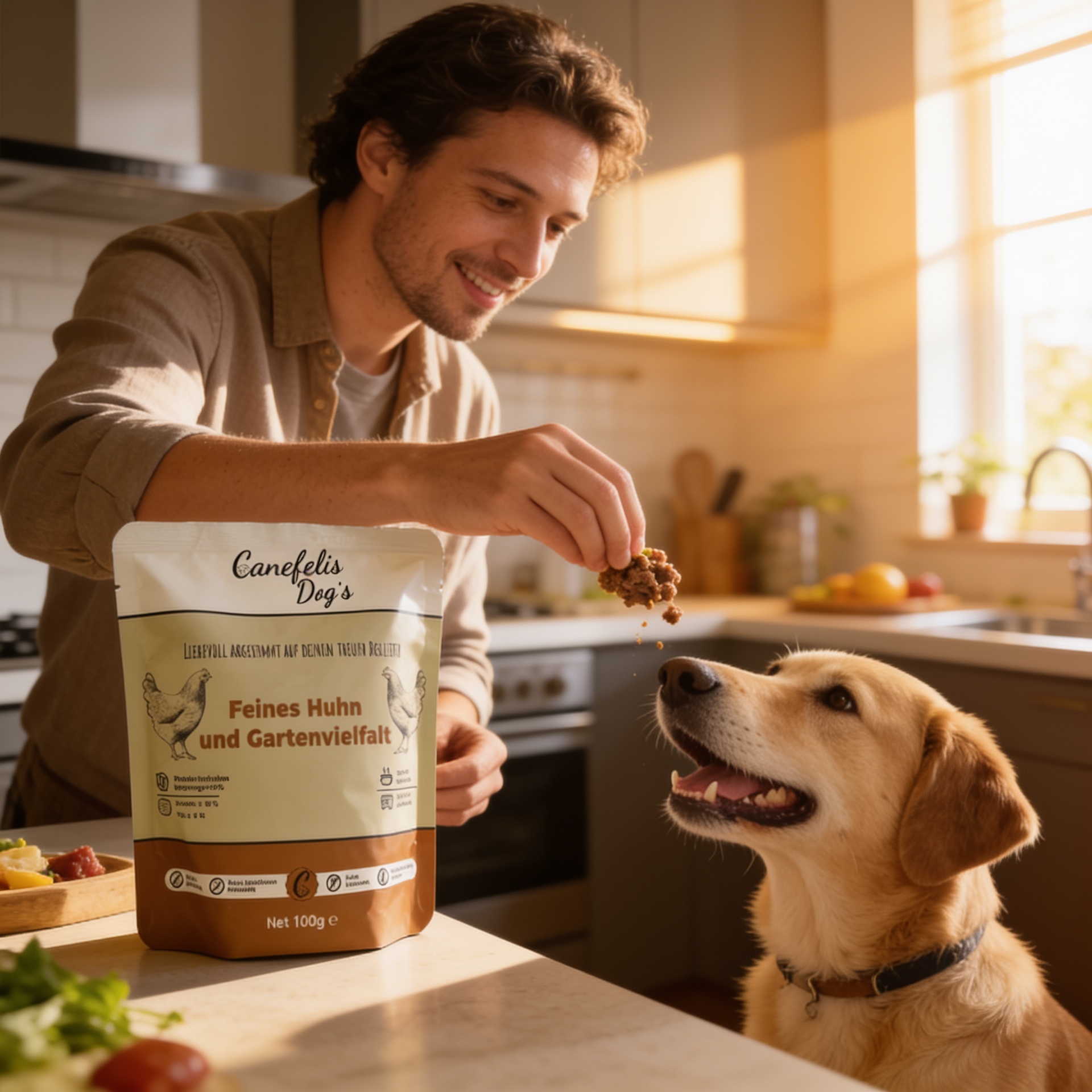
First: the trial box — a small amount at a small price, ideal for exactly this test. Second: the taste guarantee — if your dog does not accept the trial box, your risk is covered (conditions in the Terms). That way you can calmly find out whether your dog likes the soft, gently baked texture and the high meat content — without buying a big pack right away.
And the best part: you do not have to take our word for it. Turn the pack around, read the percentages, and let your dog decide.
And if your cat is not eating?
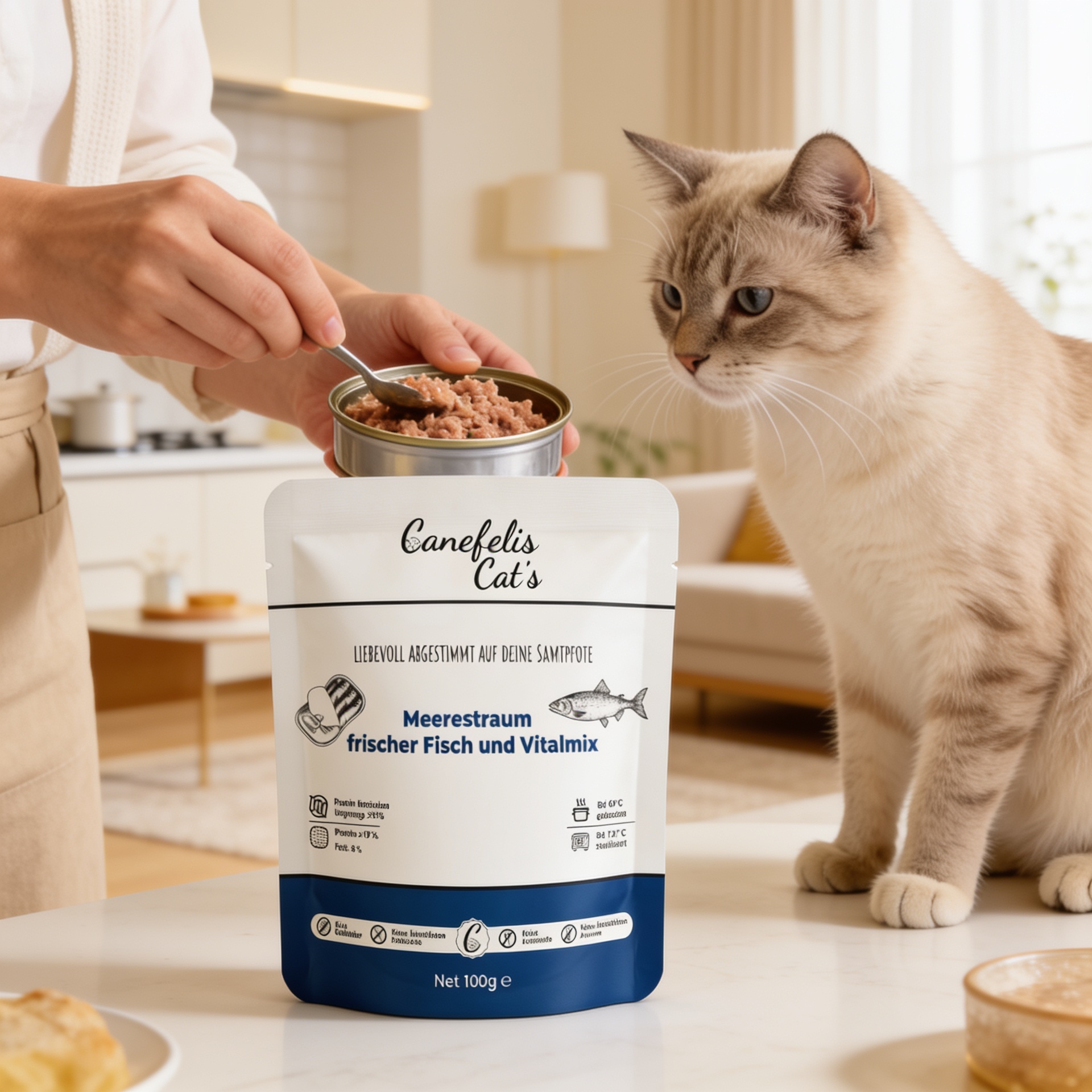
Cats are often even pickier than dogs and react sensitively to change. Many of the principles here apply to them too — fixed routine, freshness, soft texture, high meat content. We cover the special case of cats in a separate article.
Frequently asked questions (FAQ)
Why has my dog suddenly stopped eating even though he seems fine?
In a lively dog it usually comes down to routine, too many treats, stress, or simply taste and texture. Keep fixed times, reduce snacks, and observe. If it lasts over 24 hours or symptoms appear, see the vet.
How long can a healthy dog go without food?
A healthy adult dog can easily skip one meal. Beyond 24 hours without food, however, you should seek veterinary advice — with puppies, immediately.
My dog only eats treats — how do I break the habit?
Cut snacks drastically, offer meals at fixed times, and remove the bowl after 15–20 minutes. Once real hunger develops, pickiness usually fades on its own — consistency is the key.
Does different food help if my dog is picky?
For a healthy, picky dog, a food with a more intense taste and softer texture can indeed be accepted better. Important: switch slowly (7–10 days) and ideally test with a small amount first.
Should I warm the food?
Yes, slightly. At room temperature or briefly hand-warm, smell and taste open up better. Never serve it hot, and always check the temperature.